One could be forgiven for seeing a dog’s breakfast of regulations when it comes to cosmetic tattooing in Australia. The short of it is there is no national licence for the trade. What you will find are public health laws put in place by the various states and territories, registration with your local council or health authority as a skin penetration business, and a host of other controls on everything from infection and product safety to anaesthetics and therapeutic goods.
Put simply, offering lip blush, eyeliner or eyebrow tattoo, microblading or any form of permanent makeup is not “just beauty” in the eyes of the law. In most jurisdictions it is a skin penetration procedure and the legal obligations in respect of inspections, consent, records and hygiene are all the more pointed. Many make the mistake of thinking an Instagram presence and a day course will see them through.
I am Clara Whitmore and my experience of writing on practical systems in this country has taught me that while the national view has its place, the fine print is to be found at a local level. When it comes to Australian cosmetic tattoo laws you have to do your homework on your state or territory health rules, what your council demands and make sure every product is up to snuff and lawful.
What is Cosmetic Tattooing?
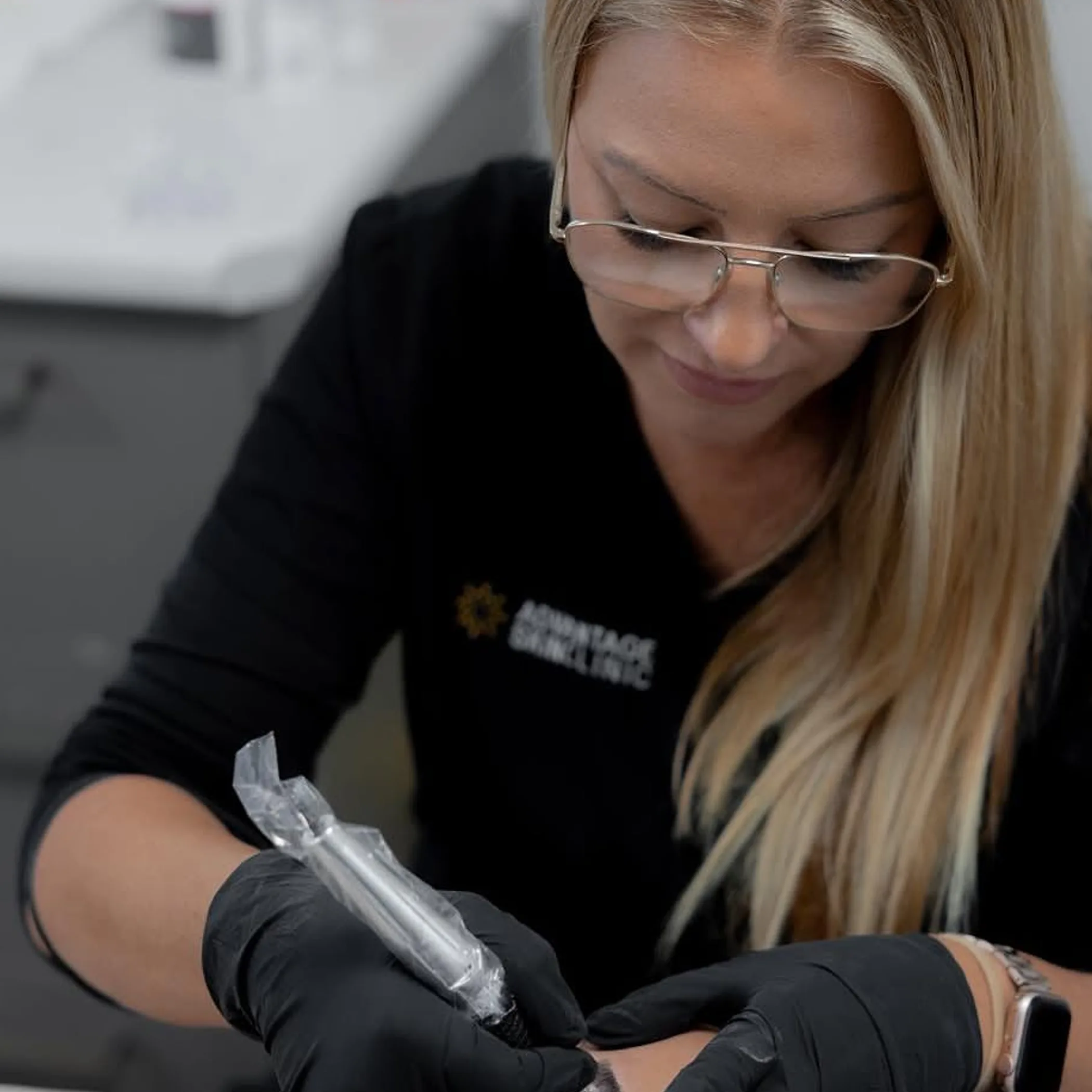
Confusion is rife here. You may see operators touting feathering or permanent makeup in softer terms but regulators tend to be more concerned with the act of implanting pigment than with how it is marketed.
The likes of microblading, manual or machine work on the brows, lip blush, scalp micropigmentation and certain beauty spot procedures are all covered. Additionally, one must consider the risks of eyelash tattoos. It is not a question of whether the treatment is less harsh than a conventional body tattoo; the fact is there is risk of blood and body fluids, of an allergic reaction or poor healing and possible infection.
Reality Check
Some would have you believe cosmetic tattooing is a beauty service like waxing or tinting. Health regulators do not see it that way, they put it in the same category as tattooing and other forms of skin penetration. This has implications for your licensing, how the room is set up, sterilisation and the disposal of sharps.
A National Framework
Do not expect to find a federal licence and a rulebook to match. Australia is a patchwork of federal, state and territory systems so a practitioner has to look at more than one regulator. There is no single board to register with on the lines of AHPRA for a health professional. Permanent makeup in Australia is governed by a combination of consumer and public health law, poisons legislation, industrial chemical and therapeutic goods rules. Training standards are a separate matter altogether.
Matters of Regulation
Public health and infection prevention for skin penetration are typically the province of state and territory health departments. Your local council or health unit will be the ones to deal with premises registration and inspections in some jurisdictions. Then there are the federal agencies when it comes to imported chemicals and the safety of tattoo ink in Australia.
As for qualifications, the nationally recognised system is what counts. For the formal training pathways and units such as SHB50321 you can refer to the information on Training.gov.au. It is the proper way to go about it though it does not of itself give you local approval.
State Rules
To spare yourself some grief and expense, pay attention to where you are. The principle is the same throughout Australia but the terminology and process of registration will vary. Whether in Western Australia, Queensland, NSW or Victoria a cosmetic tattoo operation is regarded as a personal appearance or skin penetration business. The onus is on you to have the right premises, cleaning and sterilisation in order and to abide by public health directions.
Jurisdiction at a Glance
Below is a table for your reference. But do not take it as gospel in lieu of consulting your local authority; the process at the salon next door may well be different and rules are subject to change. Jurisdiction and the Usual Classifications
| Jurisdiction | Typical Classification | Main Practical Requirement | What Catches People Out |
| NSW | Skin penetration business | Notify or register with local council or relevant authority, meet hygiene rules | Assuming cosmetic procedures are exempt because they are facial |
| Victoria | Registered premises for skin penetration activity | Registration through local council under public health framework | Home setups that do not meet structural or inspection requirements |
| Queensland | Higher risk personal appearance service | Local council approval and infection control compliance | Not realising cosmetic tattooing is treated as higher risk |
| Western Australia | Skin penetration practice | Local government approval and health compliance | Using products without checking ingredient and safety status |
| Other States And Territories | Public health or skin penetration category | Check health department and local authority requirements | Copying another state’s process and missing local rules |
You will find the likes of NSW Health, the Victorian and Queensland departments of health and Western Australia Health (Get The Facts) among the relevant agencies. In Australia a cosmetic tattoo licence is rarely a single licence in the strict sense of the word, more a collection of approvals, registrations and the like.
Training That Is of Use
There is no equivalence between a certificate hanging on the wall and being competent. Substandard training in the cosmetic tattooing field is evident on the client’s face and skin, and can lead to formal complaints.
One comes across the SHB50321 diploma cosmetic tattooing as the qualification of choice in this arena. It is within the national training framework and verifiable at Training.gov.au. But working towards or having the SHB50321 is no sure fire way of meeting all the legalities for trading in a given locality, nor does it mean you are adept at every style of treatment.
Competencies We Would Recommend
A sensible approach is to have your recognised training and supervised practice along with an understanding of local compliance and infection control. A good practitioner will be versed in colour theory, contraindications, wound healing and patch testing, as well as the softer skills of client consultation, photography and recordkeeping. They know how to handle complications and when to put the needle down.
Beginners are apt to underestimate their obligations on infection control. Technique is the part of the training they market as the interesting bit. It is the unglamorous stuff, from hand hygiene and sharps to environmental cleaning and cross-contamination, that makes for a lawful and safe business.
Hygiene Is Mandatory
It is the industry’s backbone. An operator who is careless over aftercare instructions, waste, cartridges, surfaces or gloves can turn even fine cosmetic tattoo work into a public health issue.
Rules for infection prevention call for cleanable premises, handwashing, single-use items, a system for disposing of sharps and procedures to preclude contamination from one client to the next. Sterilisation may be called for if you have reusable equipment.
Practical Standards
An inspector is not going to be won over by a neon sign and a pale timber bench if there is no proper sink or any separation of the clean from the dirty, or if staff training cannot be shown. Inspections are about whether your systems hold up in reality.
- Have in place documented disinfection and cleaning for your touch points and treatment areas.
- Hand hygiene and incident records must be maintained, as should waste management and disposal of sharps.
- Where you need to use sterile single-use items, leave the packaging alone until treatment time.
- Pigments and consumables should be put away to avoid mix-ups or heat damage.
- Organise the client’s medical history, consent and aftercare files so they are to hand.
Should you put aside a day to look at your compliance, this is where to begin. Reputational harm and enforcement come quickly from failures in infection control.
On Ink And Product Safety
Tattoo ink contaminants and the provenance of your product are as worthy of your attention as colour retention and the healed result, yet it is one of the more opaque areas of the trade.
In Australia it is not a case of buying from whoever is popular. Some pigments are subject to industrial chemical regulation and there can be questions over undeclared ingredients or labelling. Check the regulatory status and chemical introduction via industrialchemicals.gov.au.
Before you put something to use
“PMU safe” or “organic” are not words to take at face value. Have the supplier documents and batch and ingredient information. If the product is making therapeutic claims then you have further regulation to contend with.
For certain items the Australian Register of Therapeutic Goods is pertinent. A topical product put forward for therapeutic use, particularly numbing or healing products with strong claims, may require to be on the Australian Register of Therapeutic Goods (AUST R) register.
And be open with clients as to the risks. With an eyelash tattoo for instance there is more at stake than a poor cosmetic outcome; proximity to the eye means you have to factor in swelling, the possibility of injury and infection.
Consent And Age
A facial tattoo is a visible and personal matter, not to be approached with any casualness. Nor is good consent a case of putting pen to paper in the time it takes a client to finish their latte.
In Australia one will not find a single national rule of thumb for age limits on cosmetic tattooing that applies to every procedure or situation. In some jurisdictions traditional tattoo law puts restrictions on minors, with little or no leeway for parental consent. Cosmetic work can be more of a grey area by virtue of the local law, the nature of the procedure and the policy of the business; it is up to the practitioner to check his own jurisdiction and not put stock in what is said in the salon.
Real Consent
Consent has to be properly done. It must address the risks and the procedure itself, contraindications, what to expect in the way of healing and touch-ups, the prospect of an allergy or infection, pigment migration, fading or a colour shift, and the fact that the end result might not be as it was mapped out. The client ought to be given all the facts and the opportunity to put questions to you before declining.
The pre-treatment paperwork is where operators tend to be in too much of a hurry. Should a complaint arise, shoddy records are as damaging as poor technique.
Care With Anaesthetics
Many an operator of good intent has been lured into trouble over numbing products. Do not assume that because a product is a talking point in beauty training its use or the way it is supplied is above board.
Regulations for topical anaesthetics in cosmetic tattooing can be subject to poisons legislation and state scheduling as well as Commonwealth therapeutic goods rules. A scheduled substance in a cream may mean its supply and application are off limits. One needs to know if the product is listed on the Australian Register of Therapeutic Goods, if it is being supplied for the purpose and who is permitted to apply it.
No Wing-ing It
When in doubt as to a product’s compliance, put the matter to rest and verify. “My trainer told me” or “it is what the group chat does” will not stand up to poisons legislation which can be unforgiving. A numbing setup that is not compliant is a health and legal headache.
Inspections And The Home Studio
Is it possible to run a tattoo operation from home in Australia? Only if your council and the framework of your state or territory have no objection and public health requirements are met. More than just putting a bed in the spare room and making do.
With cosmetic tattooing at home there is a disconnect between what is expected and the reality. There are those who see flexible hours and cheap rent. The regulator wants to see proper waste handling, handwashing facilities, zoning, privacy, surfaces that can be cleaned, no pets about and a space he can inspect.
What I have come across in my time with small regional businesses is that “home-based” can be anything from well ordered to very rough. In this field there is little middle ground: the premises are suited to regulated skin penetration or they are not.
| Setup Choice | Likely Costs | Advantages | Risks |
| Home Studio | Lower rent though fit-out and compliance are still there. | Flexibility, lower overheads. | Zoning problems, a failed inspection, contamination in the family home or the council saying no. |
| Commercial Studio | Higher outgoings and rent. | Easier to keep living and treatment areas apart. | Lease pressure and fixed costs. |
One would be hard pressed to find a national statistic that covers all jurisdictions for approval, which says something in itself. The onus of compliance is all over the place. For that reason registration with the local council and health inspections should be part of the initial planning and not left to the end.
For Whom This Work Is
A patient and meticulous disposition is called for in cosmetic tattooing, as is a willingness to abide by the rules. Those with an aversion to paperwork, or who would be tempted to skimp on hygiene for a quick return on little outlay, will find it does not suit them.
We would not recommend it for the uninitiated. There is no place for improvised home treatment rooms, advanced eyeliner work absent of proper supervised training, or putting a service on offer before one has come to terms with public health obligations in the area. And if the business plan is predicated on using grey-market numbing creams or evading registration, it is flawed from the off.
- Put aside some time to go over the health framework in your state or territory for services involving skin penetration or personal appearance.
- Make sure you are in order with the local council when it comes to registering or notifying them of your premises.
- On training.gov.au one can verify the appropriate pathway, SHB50321 being among them.
- Look into your infection prevention and cleaning protocols, the disposal of sharps and record keeping.
- See that all pigments and topical products have the safety documentation to show they are lawfully supplied.
Some Answers To Common Questions
Readers are apt to be after this: no fluff, just the facts. While an authority may read the fine print in its own way and rules are not set in stone, here are some practical points of reference.
Is it legal to have a face tattoo in Australia?
In general yes, though it hinges on a number of things: the client’s age and consent, any jurisdictional limits and whether the practitioner and his or her premises are in compliance with public health law. Even a beauty treatment is still governed by the rules on skin penetration.
The way to make it as a cosmetic tattoo artist in Australia
You put in the recognised training first and develop the necessary skills under supervision, along with a command of infection control and what the regulators require. Most will turn to the units on Training.gov.au like SHB50321 but you also need insurance, products in order and whatever approval the council or health department deems necessary.
Home tattooing in Australia?
It can be done in some cases, provided the operation is permitted and the premises are up to standard. Before you take on clients you should have made inquiry as to local zoning, inspection and the likes of public health and council approval.
How does a cosmetic tattoo differ from a regular one?
It is tattooing of a sort, to enhance the look of the lips, eyebrows or eyeliner. But the regulator sees the same issue of skin penetration so the rules on consent, the premises and hygiene are much the same.
Is a licence required for permanent makeup?
Not in the sense of an Australia wide one. You will have to conform to the public health laws of the state or territory and in most instances get the council’s nod or register. It is why licensing for cosmetic tattooing in Australia can seem a patchwork affair; there are several regulators and obligations to contend with.
A word to the wise
Regulations in Australia for cosmetic tattooing are a fact of life and layered; they are not something to be put off. Don’t be looking for a national licence to do the heavy lifting. Have the training, the premises, the products, the systems and the local approvals in place.
Were I to put a business together tomorrow I would not be concerned with a flashy website, ring lights and logos. I would be making sure the treatment space could stand up to scrutiny and attending to the council process, the SHB50321, product records and infection control. It is not glamorous but it is the backbone of a lawful operation and of far more consequence than any marketing.