The first thing to ask when planning a 2026 capital works fund is a matter of practicality: will there be sufficient funds with the owners corporation once the roof or the concrete and waterproofing and balconies come due for some hard work? With a 10-year plan in place one can put that question to rest before the bill comes in, instead of waiting until “minor repair” has lost its humour.
In the case of an NSW strata scheme it is incumbent on the owners corporation to have a long-term forecast in writing, to set levies for the capital works fund at the right level and to give the plan a regular once-over. I am Clara Whitmore and have put this guide down in plain terms; building budgets are complicated enough without the need for a fog machine. Here you will find what should be in the plan, how to go about updating it, how to mitigate the risk of special levies and the things buyers and owners ought to look at before they decide.
The Purpose Of The Fund
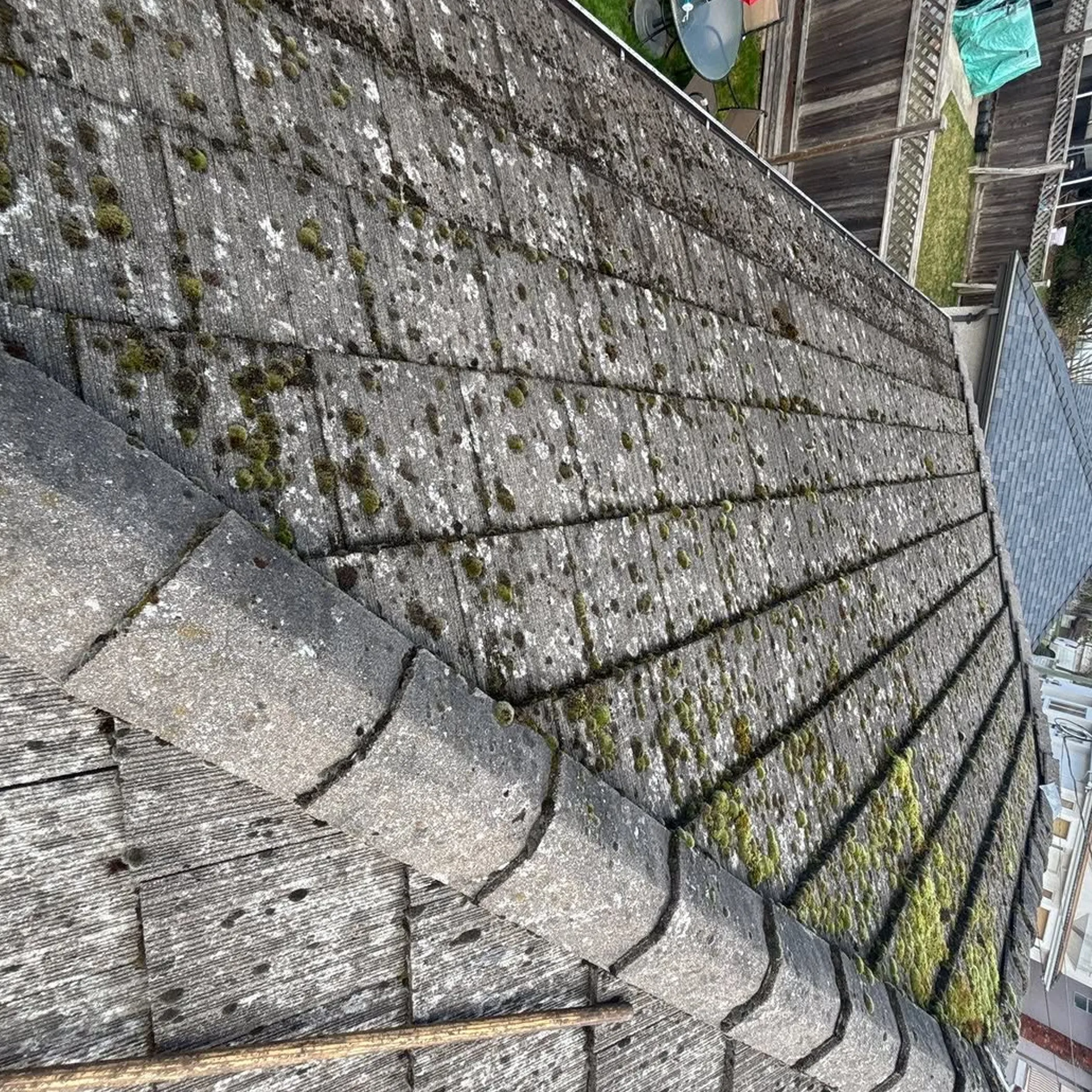
Whereas the administrative fund is for the day-to-day running of things like insurance, utilities, cleaning and gardening, the capital works fund is for the long-term renewal, replacement and major repair of common property.
Do not mistake it for a savings account of more pretentious nomenclature. It is a maintenance reserve cast in forward-looking terms, taking into account the building’s condition and age, the probable cost and timing of any major works and the useful life of the assets. See these building care guidelines for practical advice.
Put Major And Routine Costs In Their Place
Fixing a light fitting, a small defect or having equipment serviced is routine maintenance. You would put roof or balcony work, external painting, lift renewal, fire-safety or concrete spalling under capital works.
It is not always a clear cut line so a quantity surveyor, strata manager or other building consultant with the experience may have to make a call on the proposed work. To put everything under capital works is to skew the forecast; to write off major renewal as an administrative expense makes the long-term budget appear in better shape than it is.
What NSW Planning Demands
Under the Strata Schemes Management Act 2015 and the 2016 Regulation, an owners corporation in NSW has to plan its capital expenditure for the next 10 years. As far as the 2026 information goes there is no sign of a wholesale change to the way this is done but one should not put faith in an old plan or approve a budget without referring to the current legislation and any formal guidance. The 2015 Act is where to start on statutory requirements.
Make A Ten-Year Plan That Is Of Use
A plan that is in compliance does not merely put “future repairs” on a list. It tells you what the common-property asset is, what is expected of the work, when and at what cost, and how the owners corporation intends to put up the money. It should also detail the planned annual contributions and what is in the fund already. If the fund can only see you through six months of ordinary work yet a project is three years away, let the plan say so. Anything less is polite fiction.
Review it as the law sees fit and sooner if the situation calls for it. An old forecast is no good if there has been a construction issue, an insurance claim, a major defect report or a spike in costs.
Forecasting
For a capital works fund forecast to have any value it must tie the state of the building to the money. Get it reviewed and approved at the AGM after a site inspection and realistic costing. There is no point in taking last year’s spreadsheet and tacking on a few dollars for inflation. Complications with access, asbestos or scaffolding can see costs lurch, and buildings do not age in a straight line.
Evidence From The Building
Have the original plans to hand along with any defect reports, warranties, maintenance and capital works records, meeting minutes, insurance papers, invoices and quotations. See if a repair from some time back put the problem to rights or just put it off for another day.
Then go and inspect the major components of the building: the roof and gutters, windows and external walls, the basement and driveway, the membranes and balconies, plumbing and electrical infrastructure, the lifts, fire systems and the common areas inside. What one puts on the list will be a matter of how the scheme is put together and what services are on offer.
One should pay close heed to building defects. The likes of water or rust staining, persistent leaks, cracks, tiles that have come loose, ponding water or sealants in disrepair can be symptomatic of something more serious. With balcony repairs and waterproofing it is all too easy to put a low figure on them; the extent of the work to get at and remedy the source can be far greater than the damage on show.
Condition And Timing
Take note of the state of each asset, the probable cost and any intervention that may be called for, as well as its remaining life span. A maintenance plan has to make the difference between a routine check and preventive measures, and between a repair and an outright replacement.
The timing must be in keeping with the way the building is used and local conditions. An exposed coastal roof will not have the same replacement cycle as one further inland. One has to factor in salt air, heavy rain, the threat of bushfire, poor drainage, high foot traffic and so forth.
A rolling forecast is to be preferred over something that is consigned to a filing cabinet. Make a point of putting the forecast up against what has actually been spent, new quotations, work done and any defects that have come to light in the course of the year and adjust your assumptions accordingly rather than assume the original figures are unimpeachable.
- Confirm balances and expenditure already committed.
- Have major common-property assets inspected and their condition noted.
- Get some hard numbers from those who can give a realistic estimate of the work involved.
- Put in place an allowance for contingency and inflation.
- See if the levies proposed are in line with cash-flow requirements.
- For the AGM, motions should be straightforward and the downside of delay made plain.
Budgeting for Major Works
There has to be enough detail in a capital works fund plan to underpin a decision. “Building repairs” does not cut it. To put owners in a position to budget properly one would say “Replace membrane and put right the tiled finishes on the eastern balcony elevations, pending engineering advice”.
Then there is the question of cost. The contractor’s headline price is only part of it. Between project management and design, testing and approvals, access equipment, waste removal and the odd unforeseen condition, the final tab will be higher.
Common Property
The strata sinking fund will typically cover such things as the roof, gutters and downpipes, external paintwork, façade and windows of a common nature, balconies, basement systems, driveways, retaining walls, lifts, security and any shared plant. Do not let concrete spalling be written off as a cosmetic matter; rusting reinforcement will make the concrete crack and even fall away, which is a structural and safety issue. The owners corporation may have to call in an engineer and face a steeper bill and a sense of urgency that a patch-and-paint job does not warrant.
With a roof due for replacement, do not leave it to a storm to reveal its failings and convert planned work into an emergency with a bigger bill and less choice of contractor.
Inflation And Risk
Do not hide inflation in an opaque total but make it an assumption. Say a project comes in at $100,000 and you apply 4% a year for three years by way of illustration, the projection is in the order of $112,486 before contingency. This is for planning purposes, not a quotation from the market.
Be clear on the base. On a $100,000 project a 4% allowance is $4,000 for the year, not a flat $4,000 no matter the size of the project. A 10% contingency on $300,000 is $30,000. Set out the rate, base and timing in the notes for the owners to follow.
| Planning Item | What To Record | Why It Matters |
|---|---|---|
| Asset | Roof, lift, façade etc. | Prevents vague budgeting |
| Condition | Evidence of whether it is good, urgent or being monitored | Ties the forecast to the building |
| Timing | Indicates when the cash will be needed | Shows when funding will be required |
| Cost | An open and transparent view of the capital works fund including inflation and contingency | Creates a transparent capital works fund forecast |
| Funding | Any shortfall in the levy and existing balance | Highlights the risk of special levies |
Annual Contributions
The levy for the capital works fund ought to be based on what the forecast says is required, not on what is convenient and affordable in the here and now. The owners corporation has to have the means for the works at hand while the contributions are reasonably predictable. They are apportioned by unit entitlements and the law of the scheme. Owners would do well to look over the schedule; a low contribution is likely to be deferred cost and invite a special levy down the track.
Test The Cash Flow
Take a scheme with $240,000 in capital works on the books for the coming five years. With $90,000 at hand and an expectation of $20,000 from interest or other allowable income, one is left with a funding shortfall of $130,000. On paper that is $26,000 a year, assuming no timing or inflation variances and setting aside any extra risk.
But do not put much stock in such an easy sum in lieu of a sound forecast. Projects have a way of not coming in evenly; a $150,000 waterproofing job next year will put a different strain on cash flow than three $50,000 projects over as many years.
Run the numbers for at least three programmes: what is expected, one with higher costs should quotes go up, and an accelerated version in case defects get worse. One is not trying to be prescient so much as to put before the owners what may transpire when the building is a building and not an entry in a spreadsheet.
Be clear about AGM Decisions
A motion put to the AGM must spell out the capital works fund levy being proposed, its rationale and the time frame it is to cover. There ought to be sufficient information for owners to see what their contributions are for.
Where there is an underfunding, make that known prior to the vote. Some owners would opt for a staged increase in levies, to borrow if the law and finances allow, to put in a one-off contribution or alter the works programme. Any of these has its consequences; one does not fund by remaining silent.
- Put forward the plan and assumptions as they stand.
- Lay out the present balance and any projected deficit.
- Give the proposed levy broken down by period and unit entitlement if it aids understanding.
- Make the case for or against deferring works and deal with any that are urgent.
- Once the AGM is done, record the decision and put the forecast in order.
Underfunding Risks
The bank balance of the owners corporation is not the only thing at stake with an underfunded capital works fund. It can result in hasty repairs, contractor price hikes, questions over who is responsible, a loss of confidence among buyers and unanticipated calls for money.
There is nothing inherently poor in management that leads to a special levy; a well run scheme can be undone by a regulatory demand or some serious defect. What is telling is a habit of avoidable surprises stemming from lax inspection, old estimates or contributions that do not suit the building.
Warning Signs
They are there to be seen: a forecast with major assets but no cost attached, persistently low capital works contributions, leaks that have not been put right, minutes that are vague, or recommendations left “to be reviewed” for years. The fund looks in good shape because the work ahead has not yet been paid for.
Then there is the error of holding to the developer’s original figures. They may have been put together when the owners corporation had no idea how the building fared in the elements, or before construction prices moved and defects made themselves known.
Due Diligence for Buyers
A buyer would do well to give the capital works plan as much scrutiny as the apartment. A new paint job in the lot is no indication of whether the common property is in need of a new roof or some major waterproofing.
Have the latest plan and financials, the AGM and defect reports, records of any special levies and levy notices. Find out if recommended works have been disputed or put off, or if they have been funded and done.
Ask Better Due Diligence Questions
Inquire as to the state of the capital works fund, the gap between what is on hand and the forecast, planned increases in the levy and what the next big project is. One should enquire as to the currency of quotes and if any professional reports have put forward work not yet in the forecast.
It is for buyers to see if there is a pattern of special levies under the scheme. A single one might have been to put money towards a sound major project, but where there are several unexplained levies it could be a sign of an unrealistic strata building repairs budget or that long-term maintenance has been neglected.
The review is also something owners can make a useful annual practice of. Prior to the AGM, go through the forecast, demand to see what large estimates are based on and back a maintenance schedule in the interest of the building, instead of putting off any difficult discussions.
Common Planning Questions
I would want these matters put right before I put my name to a contract or sanctioned a levy. Put simply, the answer is to make the numbers plain, look at the building and follow the law as it stands.
2026: Major Changes To NSW Strata Law?
Nothing in the information provided bears out a particular 2026 overhaul of the capital works fund planning framework. Before going by an old reading of things, NSW schemes would do well to consult the Strata Schemes Management Act 2015 and the 2016 Regulation along with official NSW guidance. Since legal requirements are subject to change, leave it to a strata manager or someone with the proper qualifications to verify any issues specific to the scheme.
Is There A Template For The Capital Works Fund?
You will find a template handy for putting assets, cost, condition and funding in order, though no generic spreadsheet is a substitute for an inspection or the like of a professional assessment. Make of the format what you will so long as you start with what the statute demands; the plan you end up with should be comprehensible to your average owner and not only to the one who made the formulas.
What Does The Capital Works Fund Cover?
In short, it is the long-term reserve of the owners corporation for common property renewal and replacement. Not to be confused with the administrative fund for the day-to-day running costs, this is where planned outlay comes from, be it for a new roof, structural work, painting, waterproofing or the lifts.
What Is The Right Amount To Have?
There is no dollar figure that will suit all schemes. An older building with its balconies and lifts and the attendant waterproofing problems has needs that a small new scheme does not. Let the 10-year forecast and the cash-flow dictate the balance rather than some arbitrary target.
Are Special Levies Inevitable?
No plan can offer such a guarantee. While having a capital works fund in good order and a good forecast will lessen the chance of being called on for an unexpected contribution, one cannot rule out emergencies or a hidden defect. The aim is to be well-informed and avoid financial shocks.
A Living Forecast

Do not think of capital works fund planning as a matter of compliance to be done once. It is an ongoing dialogue with the budget and the owners corporation. At every AGM the trade-offs should be explained, decisions put on record and assumptions revised in light of an asset inspection.
My rule is a simple one: if a repair of consequence is to come as a surprise to the owners, it should be in the forecast to begin with. A sensible 10-year plan may not preclude a cost rise or a crack, but it means the scheme can deal with it when the bill comes in without having to scramble.